
Introduction
Somewhere around month two of running VarshaAI, I was staring at Google Analytics at 11pm, watching the visitor counter show single digits for the third week in a row. I’d published eight posts. I thought I was doing everything right. And the silence was genuinely demoralizing.
Nobody told me that was completely normal. Nobody told me that almost every blog you admire today went through exactly that phase — weeks of publishing into what felt like a void, before anything started to move.
If you’re wondering how to start a blog and get 1000 visitors, you’re in the right place.
Before starting a blog, it’s helpful to understand the basics of SEO for Beginners, as SEO is one of the biggest sources of free traffic.
If you’re thinking about how to start a blog, or you’ve already started one and you’re wondering why nothing seems to be happening yet, this guide is what I wish someone had handed me before I began. Not the idealized version. The honest one — what actually works in 2026, what realistic timelines look like, and how to get from zero to your first 1,000 visitors without burning out halfway there.
What Is Blogging?
Blogging means creating your own website where you regularly publish valuable content for a specific audience, build trust over time, and potentially generate income through ads, affiliate links, digital products, or services. Today, the barrier to entry is genuinely low — the tools are better than they’ve ever been. What separates blogs that grow from ones that quietly disappear is almost never the technical setup. It’s the strategy behind the content and the patience to see it through.
What You’ll Learn in This Guide
- How to choose a profitable niche you’ll actually stick with
- Which blogging platform is best for beginners in 2026
- How to set up your domain, hosting, and WordPress
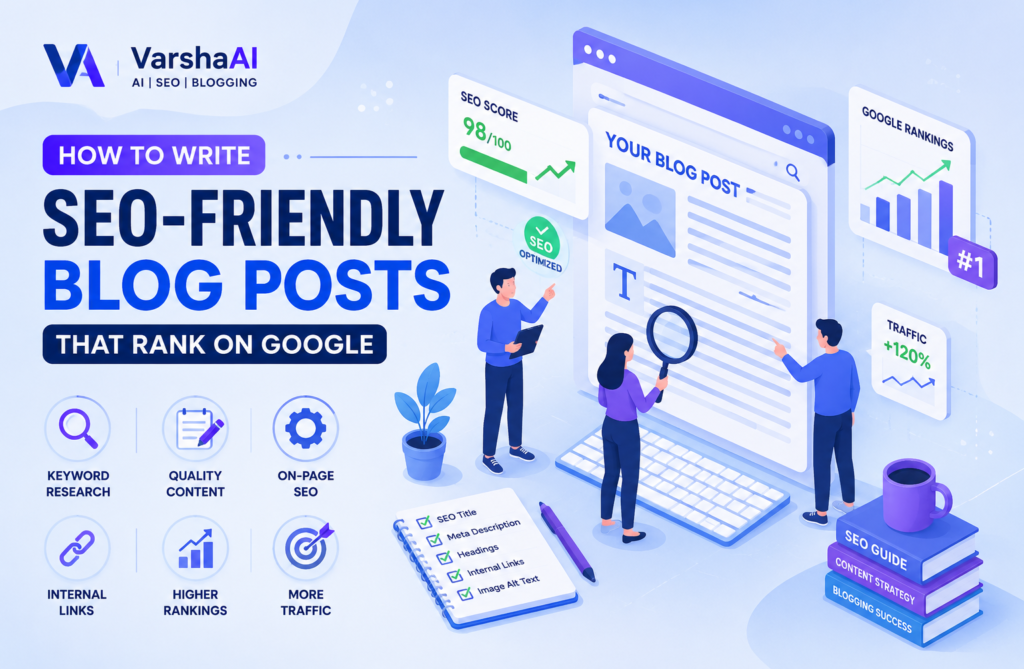
- How to write your first SEO-optimized blog post
- The exact traffic strategies that get you to 1,000 visitors
- How to make money from your blog once traffic grows
- Common mistakes that kill new blogs before they have a chance
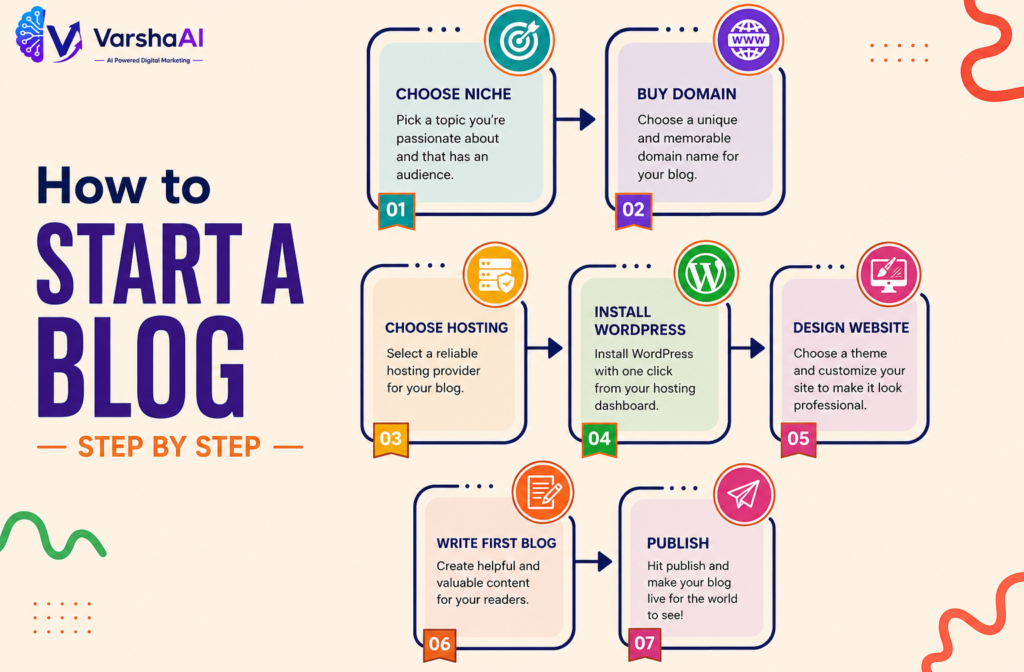
Step 1: Choose Your Niche — The Decision That Determines Everything
Before you touch a domain registrar or open WordPress, get your niche right. This one decision affects everything that comes after — your SEO potential, your content strategy, how quickly you can build authority, and whether you’ll still be writing in six months.
A niche is simply the specific topic your blog will focus on. The mistake almost every beginner makes is going too broad. “Lifestyle,” “technology,” “health” — these are categories, not niches. The sites that already rank for those topics have spent years building authority that a new blog simply can’t compete with.
What actually works is going narrower than feels comfortable. Instead of “fitness,” try “strength training for women over 40 who work desk jobs.” Instead of “marketing,” try “digital marketing for small businesses in India using free AI tools.” The more specific your focus, the better your odds of ranking on keywords that massive sites haven’t bothered targeting — because there’s not enough volume for them to care, but there’s plenty for a growing blog.
There’s a second factor most people don’t think about honestly enough: you need to actually care about this topic. Not in a vague “I’m passionate about it” way, but in a “I can write 50 posts about this without running out of things to say” way. Organic SEO takes months to build. If you pick a niche purely because it looks profitable, you will run out of motivation long before the traffic arrives.
Good niche examples that balance demand with specificity: AI tools for digital marketers, personal finance for recent graduates, productivity systems for freelancers, home cooking for beginners on a budget. Each of these has a clear audience, real search volume, and enough subtopics to sustain a blog for years.
Step 2: Pick the Right Blogging Platform
WordPress.org (self-hosted) remains the strongest choice for anyone serious about building a blog with long-term growth and monetization in mind. It powers over 43% of all websites globally, has the most flexible plugin ecosystem, and gives you complete ownership and control of your content.
The distinction that trips beginners up: WordPress.org is the software you install on your own hosting — you own everything. WordPress.com is a hosted service with free and paid plans that restrict what you can do, especially around monetization and design customization. For a blog you want to grow into something real, you want the self-hosted version.
Other platforms worth knowing: Blogger is free and simple but limited for serious growth. Wix and Squarespace are easy to use and look great, but offer less SEO flexibility than WordPress. Substack and Ghost work well if you’re building a newsletter-first audience — readers subscribe to email rather than visiting a website.
My honest recommendation: start with self-hosted WordPress. The initial setup takes a few hours, most hosts make it genuinely easy now, and you’ll avoid the frustration of outgrowing a restricted platform later.
Best Blogging Platforms for Beginners
Before choosing a platform, compare the most popular blogging platforms based on ease of use, SEO flexibility, and best use case.
Table:
| Platform | Beginner Friendly | SEO | Best For |
|---|---|---|---|
| WordPress.org | ⭐⭐⭐⭐⭐ | ⭐⭐⭐⭐⭐ | Professional Bloggers |
| Blogger | ⭐⭐⭐⭐ | ⭐⭐⭐ | Hobby Blogs |
| Wix | ⭐⭐⭐⭐ | ⭐⭐⭐⭐ | Business Websites |
| Squarespace | ⭐⭐⭐⭐ | ⭐⭐⭐⭐ | Portfolio Blogs |
For serious blogging, SEO growth, and long-term monetization, WordPress.org is the best choice for beginners in 2026.
Step 3: Set Up Your Domain and Hosting
Your domain name is your web address — keep it short, easy to spell, and easy to remember. If you can get a relevant keyword into it naturally, that’s a small SEO bonus. Avoid hyphens and numbers; both make it harder for people to remember and share verbally.
For hosting, a basic shared hosting plan is more than enough to start. You don’t need anything expensive — upgrade only when your traffic genuinely outgrows what you have. Most beginners in India can set up reliably with Hostinger, Bluehost, or SiteGround for under ₹5,000 for the first year, which often includes a free domain.
One thing worth doing immediately after purchasing hosting: install an SSL certificate if it isn’t already included. The padlock icon in browser addresses (HTTPS) is both a trust signal for visitors and a minor ranking factor for Google.
Step 4: Install WordPress, Choose a Theme, and Set Up Core Pages
Most hosting providers offer one-click WordPress installation — this step is far less intimidating than it sounds. Once it’s live, two things matter immediately: your theme and your core pages.
For your theme, pick something clean and fast-loading over something visually impressive. Google’s Core Web Vitals (page speed, visual stability, interactivity) are active ranking factors. A bloated theme with animations and heavy design can hurt your SEO before you’ve published a single post. Speed beats style, especially early on.
For your core pages, set these up before you publish your first blog post: an About page (who you are, what the blog covers, why readers should trust you), a Contact page (makes you accessible to readers and potential brand partners), and a basic Privacy Policy (legally important once you start collecting email addresses or running ads).
Your About page deserves particular attention in 2026. Google’s E-E-A-T guidelines — Experience, Expertise, Authoritativeness, Trust — increasingly reward content backed by identifiable, credible authors.
If you’re new to AI and digital marketing, start with our What Is Artificial Intelligence? guide.
Your About page is where you establish that credibility. It doesn’t need to be long, but it needs to be real — who you are, what qualifies you to write about this topic, and what readers will get from following you.
Step 5: Write Your First Blog Post — With SEO Built In
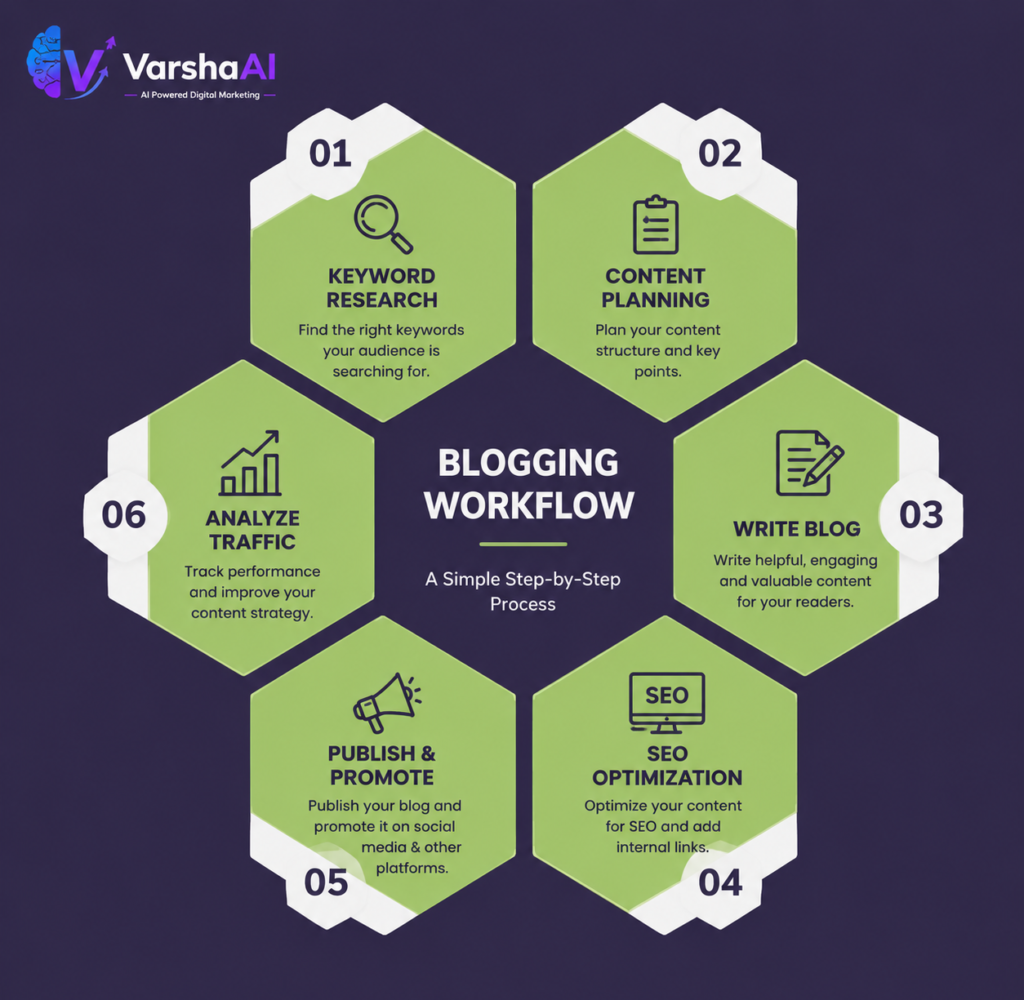
Here’s the sequence that separates posts that rank from posts that don’t: keyword research first, outline second, writing third. Not the other way around.
Before you write anything, find out what your target readers are actually searching for. Long-tail keywords — specific phrases of four or more words — are where new blogs should focus. They get fewer searches than broad terms, but they’re also far easier to rank for because the major sites mostly ignore them. A new blog that ranks on page one for “how to start a digital marketing blog as a student in India 2026” will get more traffic than a blog that never breaks page two for “how to start a blog.”
Free tools to find these keywords: Google’s autocomplete suggestions, the “People Also Ask” section in search results, AnswerThePublic, and Google Trends. You don’t need a paid tool to start finding good keyword opportunities.
Once you have your keyword, use it in your H1 title, within the first 100 words of your content, in at least two H2 subheadings, in your meta description, and in your URL slug. Don’t force it — if it reads unnaturally, rewrite the sentence. Keyword stuffing hurts more than it helps in 2026.
For length: most blog posts that rank in competitive niches run between 1,500 and 2,500 words. Long enough to be genuinely comprehensive, not so long that it becomes padded. Every section should be earning its place.
After publishing, submit the URL directly to Google Search Console. This requests indexing and gets your content seen by Google in hours rather than weeks.
Step 6: How to Get Your First 1,000 Visitors
This is the section that actually matters — and the one most setup guides rush through or skip entirely. Getting a blog running is the easy part. Getting people to find it is where strategy separates the blogs that grow from the ones that don’t.
SEO and Long-Tail Keywords: Your Compounding Foundation
The most sustainable traffic for any blog comes from organic search, but it takes time to build. New blogs must start with low-competition keywords and earn their way up. Targeting keywords where massive authority sites dominate means your content gets buried — not because it’s bad, but because Google doesn’t yet have a reason to trust your domain over sites that have been publishing for years.
What actually builds that trust: consistent publishing over time, internal linking between your posts, and accumulating content around related topics until Google recognizes your blog as genuinely knowledgeable about your niche. One quality post per week, published reliably, beats five posts in one week followed by two months of silence — both for readers and for how search engines read your publishing signals.
Pinterest: The Most Underrated Channel for New Blogs
Pinterest isn’t really a social media platform — it’s a visual search engine, and it treats new accounts far more fairly than Google does. People search Pinterest with exactly the kind of intent-driven queries your blog posts answer: “how to start a blog for free 2026,” “AI tools for digital marketing beginners,” “blogging tips for beginners.” These are real searches happening every day.
For a new blog, Pinterest can drive real visitors within weeks — long before SEO kicks in. Create a business account, design vertical pins (1000x1500px works well) for every post you publish, write keyword-rich descriptions, and pin consistently. The content lives on Pinterest indefinitely and keeps sending traffic passively, unlike a social media post that disappears in 24 hours.
Reddit and Quora: Community Traffic That Compounds
Both platforms are underused by bloggers right now, which is exactly what makes them valuable. The rule on both: contribute genuinely first, promote second. On Reddit, participate in relevant subreddits for weeks before you share a link — and when you do, make it part of a genuinely useful comment rather than a naked link drop. On Quora, find questions related to your niche where the top answers are two or three years old, and write a fresh, detailed answer. A well-written Quora answer can send steady clicks for years from a single piece of effort.
Email List: Start Building It on Day One
This is the advice most new bloggers delay until “later” — and later consistently becomes never. An email list is the only audience you truly own. Social media reach can disappear overnight when an algorithm changes, but your email subscribers stay with you.
Add a simple signup form from the beginning, even before you have significant traffic. Offer something specific in exchange for the email address — a checklist, a short guide, a template — rather than a generic “subscribe for updates.” The conversion rate difference is significant.
Internal Linking: The SEO Lever Nobody Talks About Enough
Every new post you publish should link naturally to two or three of your older posts, and as your archive grows, older posts should be updated to link to newer relevant content. This keeps readers on your site longer, reduces bounce rate, and passes SEO authority between pages — all of which help everything rank better collectively. It’s one of the highest-impact, zero-cost SEO tactics available to new blogs.
How Long Does It Take to Get Your First 1,000 Blog Visitors?
Honest answer, based on what actually happens rather than what sounds motivating: if you’re publishing one solid post per week, targeting the right low-competition keywords, and promoting actively on Pinterest and community platforms, most blogs reach their first 1,000 visitors somewhere between months three and five.
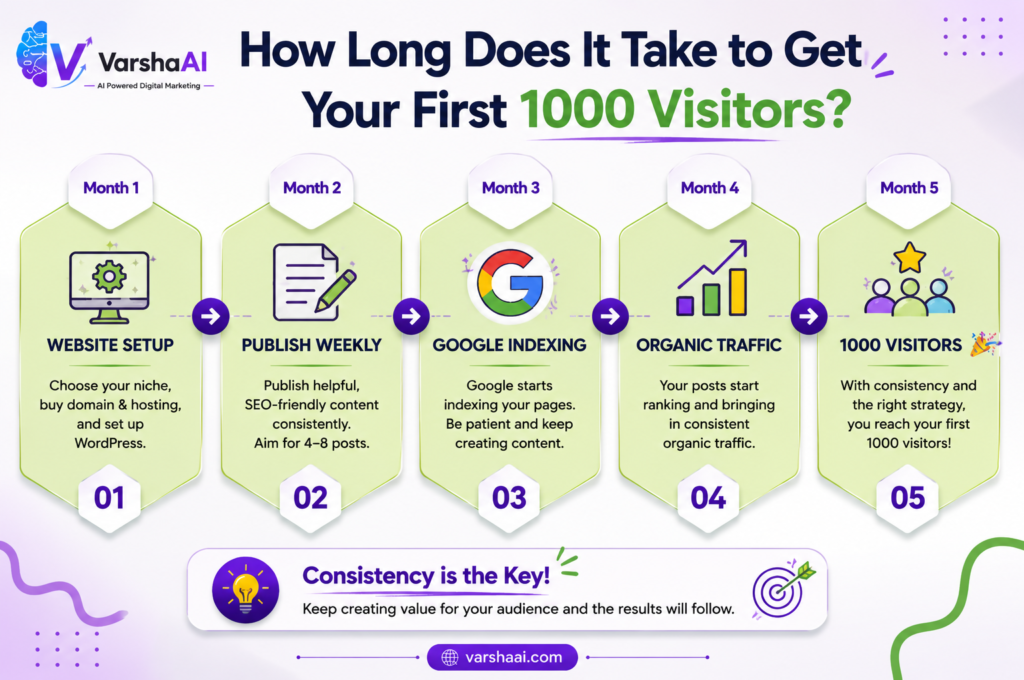
The first 60 days typically feel quiet. Some long-tail keywords will start showing impressions in Google Search Console, and you might see 50–200 visitors from early rankings — mostly from Pinterest and direct shares, not yet from organic search. This is the compounding phase beginning, even when it doesn’t feel like it.
Month three onwards is usually when organic search traffic starts appearing in meaningful amounts, because Google has had enough time to evaluate your consistency and quality. By month four or five, if the foundation is solid, growth tends to accelerate noticeably.
Think of it genuinely like planting seeds. You water consistently for weeks without seeing much above the surface, and then things start growing faster than you expected. The blogs that fail almost always stop watering just before that happens.
Essential Blogging Tools for Beginners
You don’t need dozens of tools. These seven cover everything a new blog genuinely needs:
WordPress — the foundation everything runs on. More flexible and better supported than any alternative for a blog you want to grow seriously.
Rank Math SEO — the free version handles focus keyword optimization, meta descriptions, schema markup, and readability analysis. Install it before your first post goes live.
Google Search Console — shows which keywords you’re ranking for, which pages are getting impressions and clicks, and where quick improvement opportunities exist. Submit every post here immediately after publishing.
Google Analytics — tracks where your visitors come from, what they read, how long they stay, and what makes them leave. Even basic familiarity with this data will inform your content decisions better than any guesswork.
Canva — for featured images, social media graphics, and Pinterest pins. No design background required. The free plan covers everything a new blogger needs.
Grammarly — catches grammar issues, awkward phrasing, and tone problems. Particularly useful if you’re using AI tools to speed up drafts, since Grammarly catches the subtle stiffness that AI-generated text often carries before editing.
ChatGPT — genuinely useful for brainstorming post ideas, building outlines, and drafting first versions of sections. Use it as a starting point, not a finished product. Your own voice, examples, and experience are what make content worth reading — and what Google rewards in 2026.
If you want to use ChatGPT effectively for blogging and marketing, read our How to Use ChatGPT for Digital Marketing guide.
Can You Make Money Blogging in 2026?
Yes — but the honest version of this answer matters. Monetization comes after you’ve built consistent traffic, not before, and rushing it usually backfires.
Affiliate Marketing is the most common entry point. You recommend products or tools your audience needs, and earn a commission when they purchase through your link. This works when you’ve built genuine trust — readers who believe your recommendations convert well; readers who feel marketed to don’t.
Display Ads through networks like Google AdSense, Ezoic, or Mediavine pay based on impressions and clicks. These become meaningful income at a few thousand monthly visitors. Applying too early, before consistent traffic exists, typically results in rejection.
Digital Products — ebooks, templates, courses, guides — tend to be the highest-margin option since you keep the full revenue. This path requires an audience that already trusts your expertise on the topic.
Services — consulting, freelance writing, coaching — are often the fastest path to real income from a new blog. You don’t need massive traffic, just the right readers finding you.
Sponsored Posts come later, once you have a demonstrable niche audience that brands want to reach.
Realistic timeline for first meaningful income: 6–12 months for most beginners. The bloggers who chase monetization before building an audience almost always end up with neither.
Common Mistakes That Kill New Blogs
Targeting competitive keywords too early. Writing about topics where massive sites dominate means your content is invisible regardless of quality. Start narrow, win on long-tail keywords, build authority, then expand.
Publishing inconsistently. Five posts in week one, then nothing for six weeks, is genuinely worse than one post every single week. Google reads publishing patterns as signals about your site’s quality and commitment.
Skipping keyword research entirely. Writing about what you find interesting without checking whether anyone is searching for it is how blogs end up with beautifully written content that nobody ever finds.
Ignoring the email list until “later.” Later becomes never. Start collecting emails from day one.
Quitting in month two or three. This is the one that ends more blogs than all the others combined. Most organic search traffic starts appearing in months three to five. The gap between “I’ve been publishing for two months and nothing is happening” and “traffic is finally starting to compound” is often just four to six more weeks of consistency.
Frequently Asked Questions
How long does it take to get 1,000 blog visitors? With consistent weekly publishing, targeted keyword strategy, and active promotion on Pinterest and community platforms, most new blogs reach their first 1,000 visitors within 3–5 months. SEO traffic is slow to start and then accelerates significantly.
How much does it cost to start a blog in 2026? A basic professional setup — domain registration plus hosting — typically costs ₹3,000–6,000 for the first year in India. Most hosts include a free domain for the first year with their plans.
Do I need coding skills to start a blog? No. WordPress with a modern theme handles everything visually. You don’t need any technical background to publish, design, or manage a blog in 2026.
How often should I publish blog posts? One high-quality, well-researched post per week is the ideal starting rhythm for a new blog. Consistency matters more than frequency — publishing reliably every week outperforms occasional bursts of multiple posts followed by long silences.
Is blogging still worth starting in 2026? Yes. Around 83% of internet users still regularly read blog content. What’s changed is that generic content no longer works — but well-researched, experience-based content from a specific niche still ranks and converts well.
Can I start a blog for free? You can use platforms like Blogger or WordPress.com’s free plan. Free plans restrict monetization, custom domains, and design control — for serious long-term growth, a self-hosted setup is worth the small investment.
How do I get traffic to a new blog quickly? The fastest early traffic for new blogs typically comes from Pinterest (visual search engine), Reddit and Quora (community answers), and sharing in relevant Facebook groups — while building SEO foundations that pay off in months three to six.
What should my first blog post be about? Target a specific long-tail keyword your audience is actively searching for, write something genuinely more helpful than what’s already ranking, and clearly establish what your blog is about and who it’s for.
Final Thoughts
Starting a blog in 2026 is one of the better long-term decisions you can make — not because it’s easy or fast, but because the compounding nature of content means the work you put in today keeps paying off years from now.
Your first 1,000 visitors won’t come overnight. The quiet early months, when you’re publishing consistently and the analytics barely seem to move, are the part that separates blogs that make it from blogs that don’t. Almost everyone goes through that phase. The ones who come out the other side are simply the ones who kept going.
Start with a clear niche, publish one solid post per week, build your email list from day one, and don’t measure your month-two progress against someone else’s year-two results.
If you found this guide useful, there’s more practical content on VarshaAI covering AI tools, SEO, and digital marketing — subscribe for weekly guides that skip the theory and focus on what actually works.
Related Articles
- How to use Chat GPT for Digital Marketing
- How to Use AI for Content Creation in 2026
- How to Use AI for SEO
- 10 Best AI Tools for Digital Marketing
Written by VarshaAI — helping beginners learn AI tools and digital marketing, one practical guide at a time.